前言 复习下SortedList的一些知识点。
源码地址 。
正文 定义 按照键来排序的键/值对列表,可以通过键和索引来访问数据。连续性存储结构,底层为两个数组,可动态扩容。
成员变量
修饰符
类型
变量名
作用简述
private
TKey[]
keys
键数据数组
private
TValue[]
values
值数据数组
private
int
_size
列表元素数量
private
int
_version
数据版本,用于校验对数组的操作是否合法
private
IComparer
comparer
排序用的比较函数
private
KeyList
keyList
键列表,任何对该列表的操作也会影响到SortedList本身
private
ValueList
valueList
值列表,任何对该列表的操作也会影响到SortedList本身
private
Object
syncRoot 多线程下使用的同步对象,不过现在基本废弃了。
private static
TKey[]
_emptyKeys
默认构造函数内keys初始化指向的只读数组
private static
TValue[]
_emptyValues
默认构造函数内values初始化指向的只读数组
构造函数
默认构造函数。和其他容器的默认构造函数大同小异,初始数据数组默认指向空的只读数组,下次插入必定触发扩容。
1
2
3
4
5
6
public SortedList () keys = emptyKeys; values = emptyValues; _size = 0 ; comparer = Comparer<TKey>.Default; }
预分配容量的构造函数。
1
2
3
4
5
6
7
public SortedList (int capacity if (capacity < 0 ) ThrowHelper.ThrowArgumentOutOfRangeException(ExceptionArgument.capacity, ExceptionResource.ArgumentOutOfRange_NeedNonNegNumRequired); keys = new TKey[capacity]; values = new TValue[capacity]; comparer = Comparer<TKey>.Default; }
自定义比较器的构造,会先调用默认构造函数。
1
2
3
4
5
6
public SortedList (IComparer<TKey> comparer ) : this () { if (comparer != null ) { this .comparer = comparer; } }
自定义比较器以及分配容量的构造函数,会触发一次扩容。
1
2
3
4
public SortedList (int capacity, IComparer<TKey> comparer : this (comparer ) { Capacity = capacity; }
用另一个字典以及自定义比较器来初始化的构造函数, 调用了第4种构造函数,然后将数据拷贝过去, 并进行一次排序。
1
2
3
4
5
6
7
8
9
10
public SortedList (IDictionary<TKey, TValue> dictionary, IComparer<TKey> comparer ) : this ((dictionary != null ? dictionary.Count : 0 ), comparer) { if (dictionary==null ) ThrowHelper.ThrowArgumentNullException(ExceptionArgument.dictionary); dictionary.Keys.CopyTo(keys, 0 ); dictionary.Values.CopyTo(values, 0 ); Array.Sort<TKey, TValue>(keys, values, comparer); _size = dictionary.Count; }
仅使用另一个字典初始化,调用的第5个构造函数。
1
2
3
public SortedList (IDictionary<TKey, TValue> dictionary ) : this (dictionary, null ) {}
扩容机制 空数组情况下第一次扩容为4,其余情况为2倍扩容
1
2
3
4
5
6
7
8
private void EnsureCapacity (int min int newCapacity = keys.Length == 0 ? _defaultCapacity: keys.Length * 2 ; if ((uint )newCapacity > MaxArrayLength) newCapacity = MaxArrayLength; if (newCapacity < min) newCapacity = min; Capacity = newCapacity; }
关键函数 查找 一般是根据key来找值,当然也支持通过数组下标来找值,使用ValueList[idx]访问即可。
1
2
3
4
5
6
7
8
9
10
11
12
13
14
15
16
17
public int IndexOf (TKey key ) if (((Object) key) == null ) ThrowHelper.ThrowArgumentNullException(ExceptionArgument.key); int i = Array.BinarySearch<TKey>(_dict.keys, 0 , _dict.Count, key, _dict.comparer); if (i >= 0 ) return i; return -1 ; } public bool ContainsKey (TKey key ) return IndexOfKey(key) >= 0 ; } public bool ContainsValue (TValue value ) return IndexOfValue(value ) >= 0 ; }
因为是列表本身是有序的,所以key用二分查找会更快,时间复杂度O(logN)。
但是value的查找还是得用数组遍历来处理,时间复杂度O(N)。
另外也可以根据下标来找key。
1
2
3
4
5
private TKey GetKey (int index if (index < 0 || index >= _size) ThrowHelper.ThrowArgumentOutOfRangeException(ExceptionArgument.index, ExceptionResource.ArgumentOutOfRange_Index); return keys[index]; }
插入 可以像Dictionary那样来赋值来插入数据。
1
2
3
4
5
6
7
8
9
10
11
12
13
14
15
16
17
18
19
20
21
22
23
24
25
26
27
28
29
30
31
32
public TValue this [TKey key] { get { int i = IndexOfKey(key); if (i >= 0 ) return values[i]; ThrowHelper.ThrowKeyNotFoundException(); return default (TValue); } set { if (((Object) key) == null ) ThrowHelper.ThrowArgumentNullException(ExceptionArgument.key); int i = Array.BinarySearch<TKey>(keys, 0 , _size, key, comparer); if (i >= 0 ) { values[i] = value ; version++; return ; } Insert(~i, key, value ); } } private void Insert (int index, TKey key, TValue value if (_size == keys.Length) EnsureCapacity(_size + 1 ); if (index < _size) { Array.Copy(keys, index, keys, index + 1 , _size - index); Array.Copy(values, index, values, index + 1 , _size - index); } keys[index] = key; values[index] = value ; _size++; version++; }
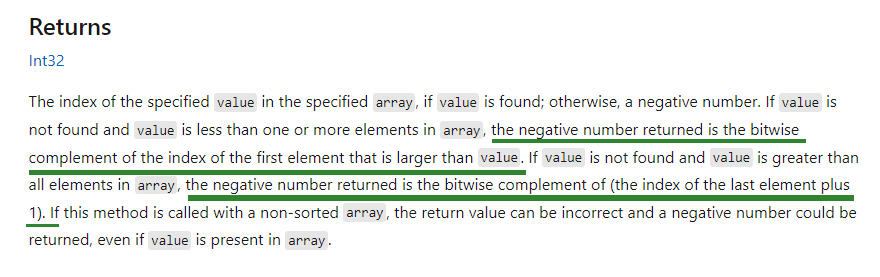
如果二分查找找不到key,则会返回合适得插入位置下标的取反,取反返回的必是负数(代表列表中不存在这个key)。
插入位置的选取参见官方文档说明
大意就是如果存在比要插入的key更大的key_larger,则返回第一个key_larger的下标取反值。如果没有更大的键,则返回列表最后一个元素下标 + 1的取反值。
之后就是将目标位置之后的元素后挪1位,腾个地给新来的key和value。
删除 既可以根据下标删除,也可以根据key来删除。
1
2
3
4
5
6
7
8
9
10
11
12
13
14
15
16
17
18
19
public void RemoveAt (int index if (index < 0 || index >= _size) ThrowHelper.ThrowArgumentOutOfRangeException(ExceptionArgument.index, ExceptionResource.ArgumentOutOfRange_Index); _size--; if (index < _size) { Array.Copy(keys, index + 1 , keys, index, _size - index); Array.Copy(values, index + 1 , values, index, _size - index); } keys[_size] = default (TKey); values[_size] = default (TValue); version++; } public bool Remove (TKey key ) int i = IndexOfKey(key); if (i >= 0 ) RemoveAt(i); return i >= 0 ; }
注意key不能为空。
裁剪容量 与List一致,容量使用未达到90%就可以裁剪。
1
2
3
4
5
6
public void TrimExcess () int threshold = (int )(((double )keys.Length) * 0.9 ); if ( _size < threshold ) { Capacity = _size; } }
总结
如果要使用数组下标访问数据可以通过ValueList和KeyList两个索引器来访问,但需要注意的是这两个接口虽然是继承自IList<T>,但只能读数据,任何写操作(Remove,Insert,Clear,Add)都不被允许。
与其他容器一样,能预估容量提前分配就使用预分配构造函数。
在少量键值对数据需要保持有序的情况下使用该容器。