前言
复习下Stack的一些知识点。
源码地址。
正文
定义
后进先出(LIFO)的顺序容器, 底层为数组。
成员变量
| 修饰符 |
类型 |
变量名 |
作用简述 |
| private |
泛型数组 |
_array |
栈数据 |
| private |
int |
_size |
栈内元素数量 |
| private |
int |
_version |
迭代时用于数据版本校验 |
| private |
Object |
_syncRoot |
多线程下的同步对象,已弃用,多线程建议使用ConcurrentStack |
| private static |
泛型数组 |
_emptyArray |
默认构造函数初始化后指向的空数组 |
构造函数
共有三种构造函数:
- 默认构造函数初始化会指向一个静态只读空数组,下一次
Push一定会触发扩容。
- 传入Capacity的构造函数则会分配对应长度的数组。
- 传入
IEnumrable<T>的构造函数会先尝试转换为ICollection<T>,如果成功了会调用CopyTo复制目标数组元素; 否则的话就会分配默认大小(defaultCapacity为4)的数组容量,然后生成迭代器不停去Push, 期间可能会触发多次扩容。
代码如下
1
2
3
4
5
6
7
8
9
10
11
12
13
14
15
16
17
18
19
20
21
22
23
24
25
26
27
28
29
30
31
32
33
34
35
36
37
| public Stack() {
_array = _emptyArray;
_size = 0;
_version = 0;
}
public Stack(int capacity) {
if (capacity < 0)
ThrowHelper.ThrowArgumentOutOfRangeException(ExceptionArgument.capacity, ExceptionResource.ArgumentOutOfRange_NeedNonNegNumRequired);
_array = new T[capacity];
_size = 0;
_version = 0;
}
public Stack(IEnumerable<T> collection)
{
if (collection==null)
ThrowHelper.ThrowArgumentNullException(ExceptionArgument.collection);
ICollection<T> c = collection as ICollection<T>;
if( c != null) {
int count = c.Count;
_array = new T[count];
c.CopyTo(_array, 0);
_size = count;
}
else {
_size = 0;
_array = new T[_defaultCapacity];
using(IEnumerator<T> en = collection.GetEnumerator()) {
while(en.MoveNext()) {
Push(en.Current);
}
}
}
}
|
扩容机制
在Push添加新元素前进行判断,容量满了会以当前大小的2倍来扩容。
1
2
3
4
5
| if (_size == _array.Length) {
T[] newArray = new T[(_array.Length == 0) ? _defaultCapacity : 2*_array.Length];
Array.Copy(_array, 0, newArray, 0, _size);
_array = newArray;
}
|
为什么几乎所有的容器扩容的容量是上一次的2倍? 可以参考知乎的讨论,以及C++ vector设计者Andrew Koenig的解释。
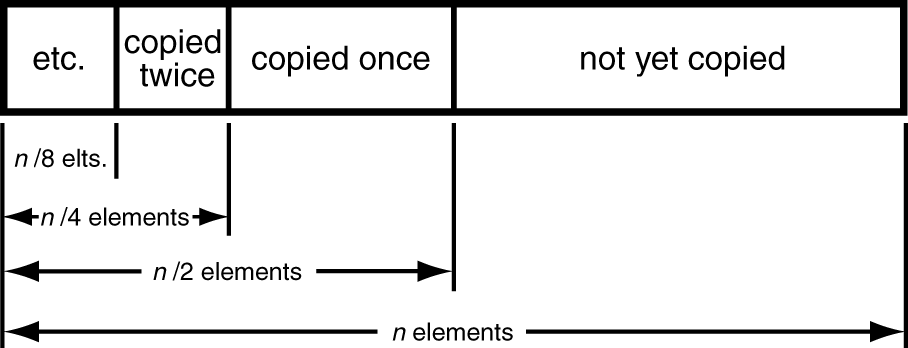
概括来说,对于n个元素的插入操作会导致K次扩容,那么2倍扩容拷贝元素的总次数为
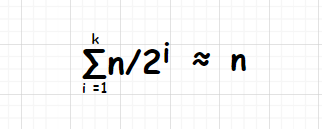
即O(N)的时间复杂度, 扩容步骤如下图所示。
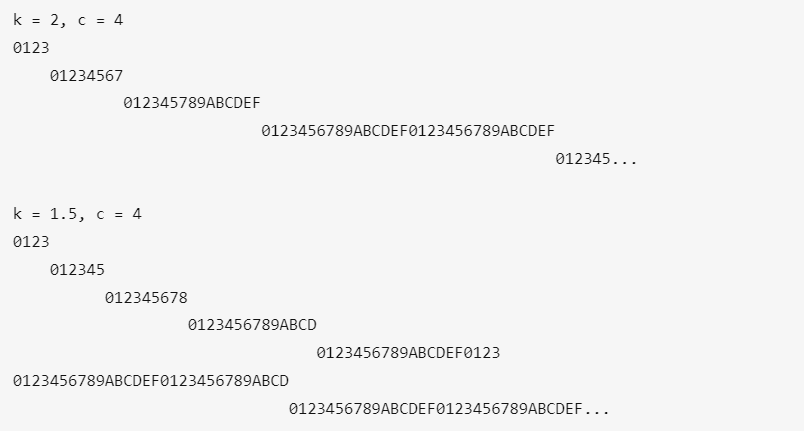
部分第三方实现会使用1.5倍作为扩容因子,这是为了N次扩容后,能够有机会复用之前的内存,对缓存更友好,不过在时间性能上会不如2倍扩容。而以2倍扩容,第N次需要的内存空间一定比前面N - 1次的扩容总量还要大,因此一定无法复用之前的内存空间。
两种因子的扩容比较参见下图。
操作函数
Push
向栈顶推入一个新元素,注意扩容触发的情况下时间复杂度为O(N)。
1
2
3
4
5
6
7
8
9
| public void Push(T item) {
if (_size == _array.Length) {
    T[] newArray = new T[(_array.Length == 0) ? _defaultCapacity : 2*_array.Length];
    Array.Copy(_array, 0, newArray, 0, _size);
    _array = newArray;
}
_array[_size++] = item;
_version++;
}
|
Pop
弹出栈顶元素
1
2
3
4
5
6
7
8
| public T Pop() {
if (_size == 0)
ThrowHelper.ThrowInvalidOperationException(ExceptionResource.InvalidOperation_EmptyStack);
_version++;
T item = _array[--_size];
_array[_size] = default(T);
return item;
}
|
Peek
获取栈顶元素
1
2
3
4
5
| public T Peek() {
if (_size==0)
ThrowHelper.ThrowInvalidOperationException(ExceptionResource.InvalidOperation_EmptyStack);
return _array[_size-1];
}
|
Contains
遍历栈检查是否包含指定元素,注意如果T是值类型的话,那么每次遍历会有装箱的开销,这种情况下应谨慎使用此函数。
1
2
3
4
5
6
7
8
9
10
11
12
13
14
15
| public bool Contains(T item) {
int count = _size;
EqualityComparer<T> c = EqualityComparer<T>.Default;
while (count-- > 0) {
if (((Object) item) == null) {
if (((Object) _array[count]) == null)
return true;
}
else if (_array[count] != null && c.Equals(_array[count], item) ) {
return true;
}
}
return false;
}
|
Clear
清空栈内所有元素
1
2
3
4
5
| public void Clear() {
Array.Clear(_array, 0, _size);
_size = 0;
_version++;
}
|
TrimExcess
将容量裁剪到当前元素数量大小,只会在元素数量超过容量90%的情况下调用才会生效。
1
2
3
4
5
6
7
8
9
| public void TrimExcess() {
int threshold = (int)(((double)_array.Length) * 0.9);
if( _size < threshold ) {
T[] newarray = new T[_size];
Array.Copy(_array, 0, newarray, 0, _size);
_array = newarray;
_version++;
}
}
|
总结
确定使用大小的情况下,尽可能地使用预分配大小的构造函数,以降低后续Push多次扩容的开销。
尽量不用IEnumrable<T>来初始化Stack。
在栈内数据未知的情况下,每次调用Pop或者Peek前先判断栈内是否有元素(stack.Count > 0)。